Kanon Private Nature Reserve’s Camera Traps
Camera trap surveys conducted at Kanon Private Nature Reserve (KPNR) over the past year have opened a rare window into the secretive lives of wildlife within this coastal landscape. Led by the Gouritz Cluster Biosphere Reserve, the project has uncovered a far richer picture of biodiversity than what visitors typically encounter on foot.
While animals may remain unseen to the casual observer, the cameras quietly document daily and nightly movements through dunes, thicket, and fynbos revealing just how alive this landscape truly is.
What Is a Camera Trap and Why Is It Used in Nature?
A Silent Observer in the Wild
A camera trap is a motion- and heat-activated camera placed in natural habitats to capture images or videos of passing wildlife without human presence. Because animals are undisturbed, camera traps provide authentic insights into natural behaviour, movement patterns, and species interactions.
A Vital Tool for Conservation and Biodiversity Research
Camera traps are widely used by conservationists to:
- Record elusive and nocturnal species
- Monitor population presence and diversity
- Track breeding behaviour and seasonal activity
- Identify species that may otherwise go undetected
At KPNR, this technology plays a crucial role in documenting biodiversity and strengthening conservation knowledge within the Gouritz Cluster Biosphere Reserve. To better understand the broader conservation framework supporting this work, readers can explore the article “Introducing The Gouritz Cluster Biosphere Reserve: A Unique Meeting Point of Three Biodiversity Hotspots.”
Rare and Remarkable Wildlife Sightings
Intimate Moments Seldom Seen
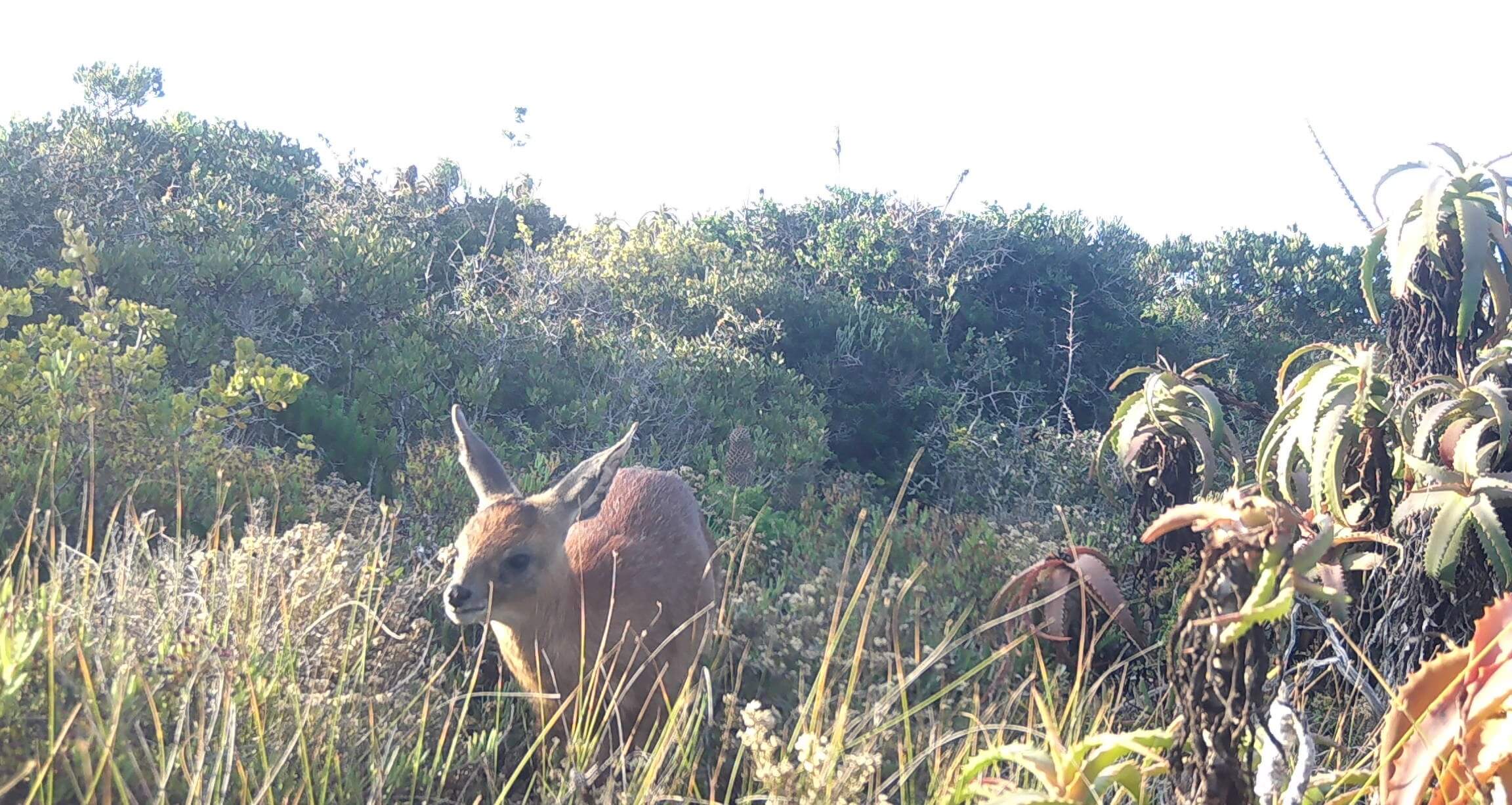
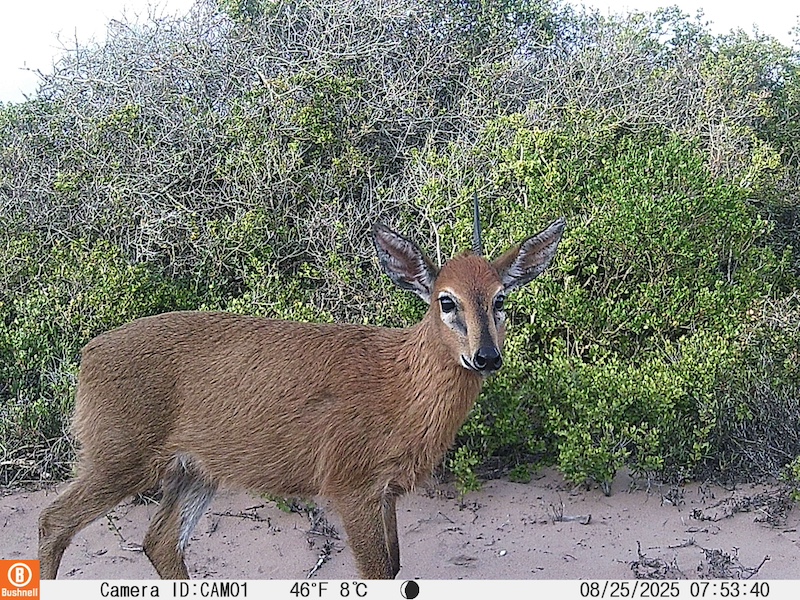
One of the most special sightings from the survey was a Cape Grysbok ewe accompanied by her tiny lamb a moment rarely witnessed in person. Such images highlight the importance of camera traps in capturing fleeting, sensitive life stages that would otherwise remain hidden.
Familiar Faces with New Stories
Regular camera visitors like Cape duiker and bushbuck continue to surprise, reminding us that even well-known species have unseen behaviours and routines unfolding beyond human view. This same philosophy of quiet observation and respect applies across the reserve’s conservation efforts, including how slower, more vulnerable species are protected explored further in the internal blog post “Slow and Steady: The Tortoises of KPNR and Why We Leave Them Be.”
Charismatic Predators and Curious Birds
A Caracal Steals the Spotlight
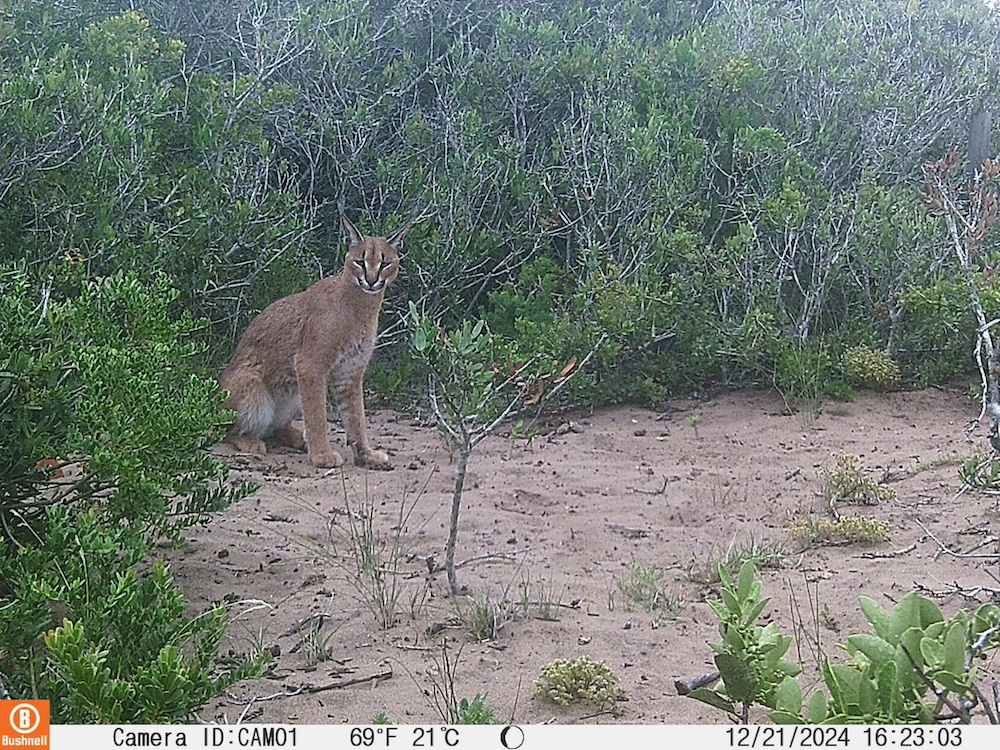
A resident caracal showed particular curiosity toward the cameras, walking directly into view, pausing to groom itself, and calmly disappearing back into the vegetation. Encounters like these help build an emotional connection to wildlife while providing valuable behavioural data.
Unexpected Avian Portraits
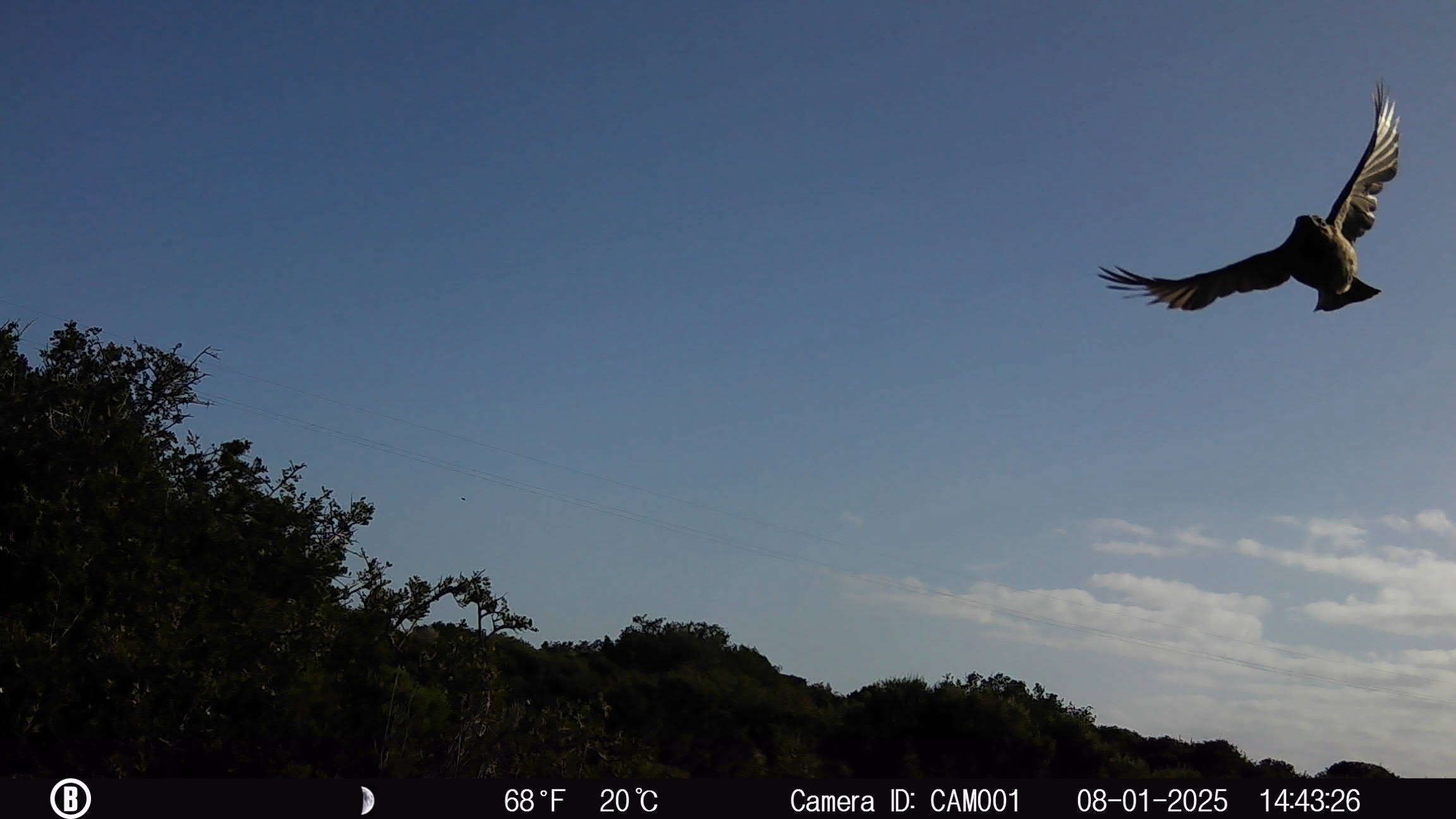
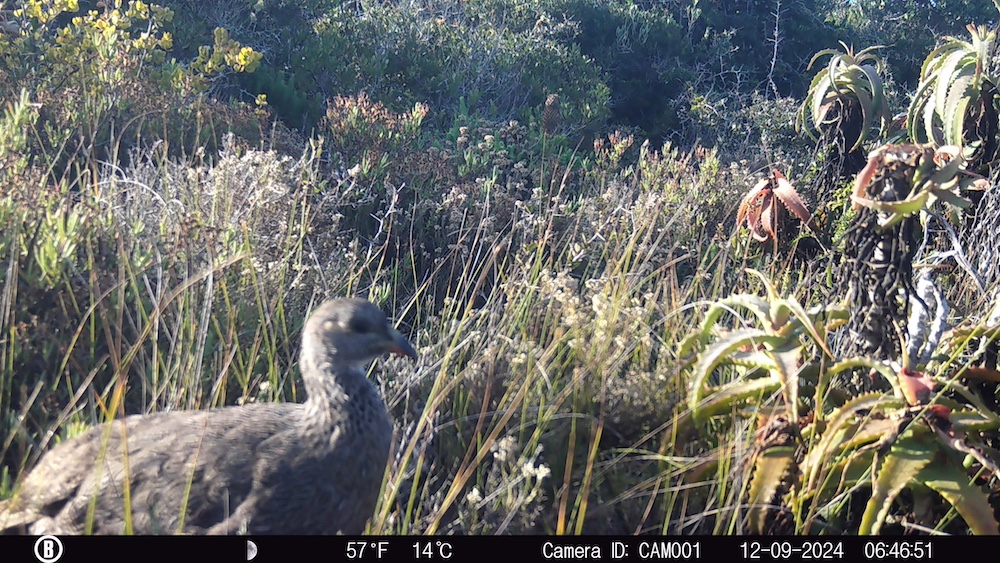
Birdlife has also played an active role in the survey, with close-up appearances from species such as:
- Hadeda ibis
- Cape spurfowl and her chicks
- Helmeted guineafowl
- Eagle owl
- Spotted Thick-knee
These encounters add depth to the survey, showing how camera traps capture an entire ecosystem not just its most visible inhabitants.
The Night Shift: Nocturnal Life Revealed
After dark, the cameras uncover an entirely different world. Shy nocturnal species like the Cape porcupine, small-spotted genet, and Bat-eared fox move through the reserve under the cover of night animals rarely seen by visitors but vital to ecosystem balance.
Why These Discoveries Matter
Camera trap surveys at KPNR are more than a collection of images. They contribute to long-term biodiversity monitoring, inform conservation strategies, and deepen understanding of how wildlife uses protected landscapes. Each recorded moment adds to a growing body of knowledge that supports responsible conservation across the region.
Explore the Full Story
These highlights offer just a glimpse into the hidden world revealed by the camera trap survey. To view the images, discover more species, and learn how this ongoing project supports conservation at Kanon Private Nature Reserve, visit the KPNR website and read the full blog post.
Every image tells a story take the time to explore them all.


For your most accurate driving route, search “Kanon Private Nature Reserve” in Google Maps or use this link below.
For detailed directions, including if traveling from the north or south of Kanon, please visit our locations page here.
Search Self-Catering Accommodation Availability & Rates Below.