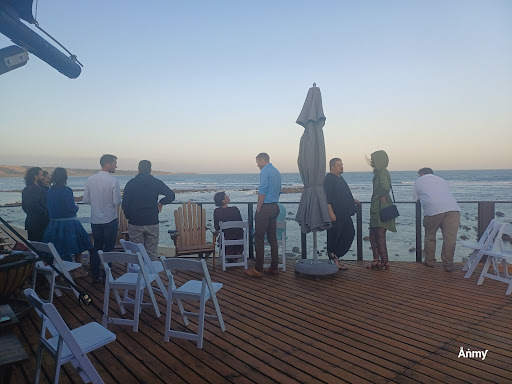
This morning, a single plastic bottle washed up on the shoreline – but it didn’t arrive alone. Its surface was completely transformed into a tiny floating ecosystem, covered in delicate white barnacles that had claimed it as their home somewhere out at sea.
It’s fascinating (and a little sobering) how nature adapts. Barnacles begin to colonise floating debris within just a few weeks, but for a bottle to be this thickly encrusted, it usually means it has been drifting for months – often 6-12 months or longer, depending on ocean currents, temperature, and species of barnacle. What looks like a piece of rubbish is actually evidence of a long journey through open water.
This bottle tells two stories at once:
The resilience of marine life – creatures finding a way to survive on anything they can attach to.
And the reality of ocean pollution – our waste travelling far further than we ever imagine. A reminder to all of us: what we throw “away” never really goes away. The ocean carries the receipt.
Even on the pristine beaches of Kanon Private Nature Reserve, the ocean delivers reminders of how far our plastic travels. Sunday’s walk revealed more debris: bottles, fishing line, lids, and one lonely toothbrush.

Want to learn to identify an animal, plant, insect, bird from your smart phone? Download the app called iNaturalist – this initiative was introduced to Kanon by Jolandie Buck of the The Gouritz Cluster Biosphere Reserve.
View observations found at Kanon such as this Goose Barnacle here and in the link below. When you next visit, you can upload observations of your own when you register your own account with iNaturalist.
Visitors often use iNaturalist when walking the trails, exploring the coastline, or documenting interesting finds washed up on our beaches. View recordings, observations uploaded and documented at Kanon in this link here.
Identification of Barnacles Found at Kanon Private Nature Reserve
The barnacles attached to the plastic bottle appear to be gooseneck barnacles / goose barnacle, most likely from the Lepas genus. This species is commonly found on floating debris along the South African coastline, including the Garden Route and Mossel Bay region. Gooseneck barnacles have a soft, flexible stalk that anchors them to floating objects and smooth, white triangular shell plates.
Estimated Age
Gooseneck barnacles grow quickly. They can begin attaching within days to weeks after the object enters the water. Small visible barnacles typically develop within 2 to 4 weeks. Fully formed barnacles like the ones shown in the image usually indicate 3 to 6 months of growth. This suggests the bottle had been drifting at sea for several months before washing up on the beach.
What This Means for Kanon Private Nature Reserve
Although the beaches at Kanon Private Nature Reserve remain naturally unspoilt, ocean currents still carry debris from far away. The presence of mature barnacles indicates that this piece of plastic travelled a significant distance before arriving on the shoreline.


For your most accurate driving route, search “Kanon Private Nature Reserve” in Google Maps or use this link below.
For detailed directions, including if traveling from the north or south of Kanon, please visit our locations page here.
Search Self-Catering Accommodation Availability & Rates Below.